Building a Python Wheel Factory for RISC-V
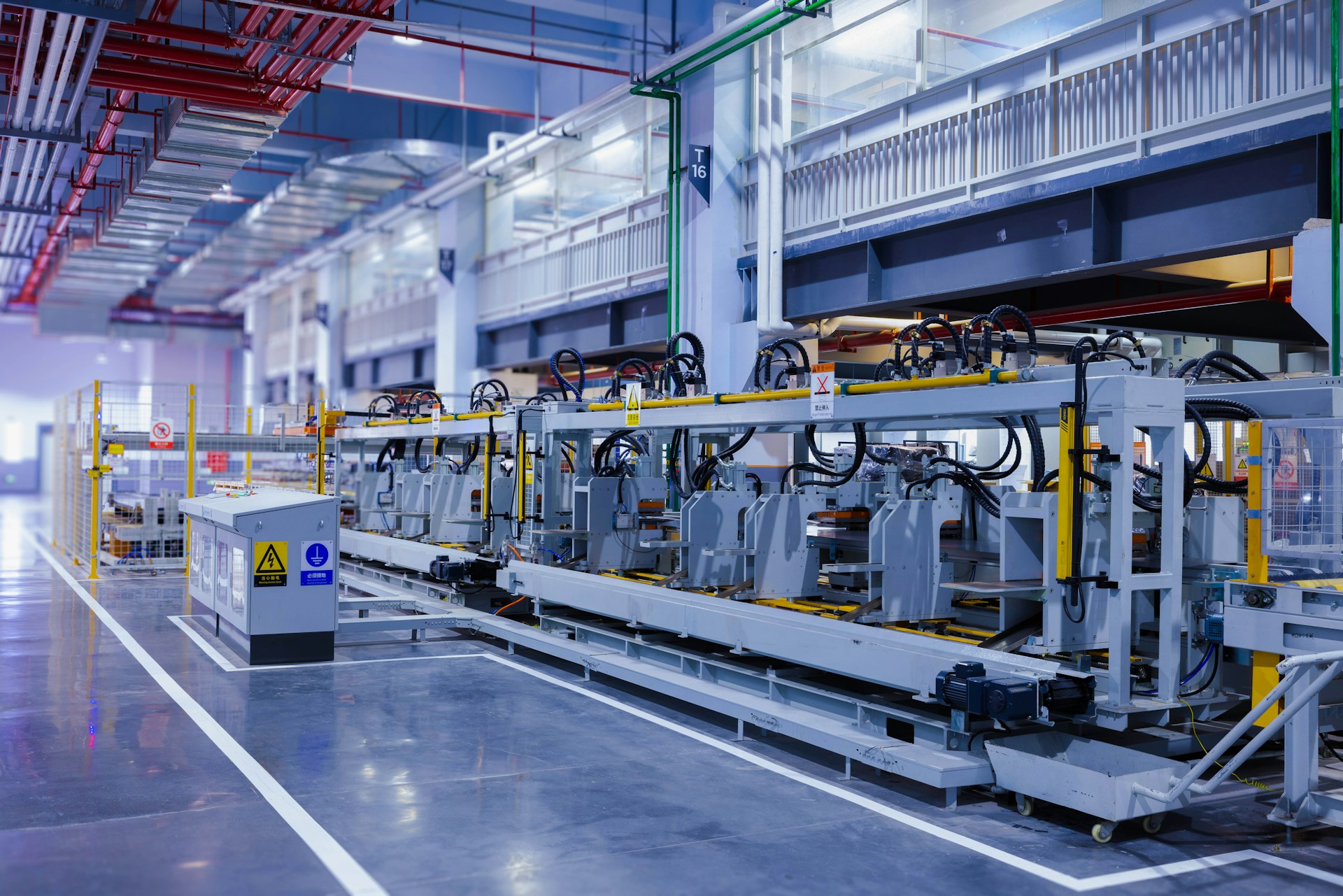
Photo by Homa Appliances on Unsplash
You know that feeling when you type pip install tokenizers and it finishes in three seconds?
That satisfying little progress bar, the “Successfully installed” message, and you’re on your way.
Now imagine the same command on a RISC-V board. No progress bar. Instead, Rust’s cargo starts downloading 200 crates. The Cython compiler kicks in. GCC churns through C++ files. Thirty minutes later, if you’re lucky, you have your package. If you’re not lucky, your SSH session timed out and you get to start over.
I got tired of waiting. So I built a wheel factory.
The goal: get vLLM, a high-throughput LLM inference engine, running on RISC-V hardware. That meant building every native dependency from source, because PyPI had almost none of them as riscv64 wheels.
The Problem Nobody Talks About
RISC-V is having a moment. The Sophgo SG2044 has 64 cores. SpacemiT’s K1 ships in real hardware you can buy today. But the Python ecosystem? It hasn’t caught up.
PyPI hosts prebuilt wheels for x86_64, aarch64, sometimes ppc64le.
For riscv64? A handful of packages have started shipping wheels (markupsafe, yarl, charset-normalizer), but for the vast majority of packages with native extensions, there’s nothing.
Every Rust, C, or C++ package must be compiled from source on every install, on every machine, every time.
The thing is, this isn’t a RISC-V problem.
The GCC 14.2 toolchain compiles everything just fine.
Rust’s riscv64gc target works perfectly.
The compilation almost always succeeds. The toolchain is solid.
The problem is that almost nobody’s running cibuildwheel with riscv64 runners, so riscv64 wheels on PyPI remain rare.
I decided to fix that, at least for the packages I needed.
The Hardware
Two BananaPi F3 boards sitting on my desk. Each one packs a SpacemiT K1 SoC: 8 RISC-V cores at 1.6 GHz, RVV 1.0 vector extensions with vlen=256, and 16 GB of RAM. Not exactly a build farm, but not nothing either.
Why build natively instead of cross-compiling? Because I wanted wheels tested on actual RISC-V hardware. Cross-compiling with an riscv64 GCC toolchain on a fast x8664 machine would be faster, sure, but then you’re trusting that the cross-compiled build matches what real silicon does. (And no, QEMU user-mode emulation is _slower than native. Convenient, not fast.) For a first pass, I wanted confidence over speed.
The Plan: Fork, Build, Index, Automate
Twenty-Six Forks
The approach was brute-force simple: for every Python package that needed a native wheel on riscv64, fork the upstream repo, add a GitHub Actions workflow that builds on my F3 boards, and publish the wheel.
I started with 15 packages. By the time I was done chasing transitive dependencies, I had 26 forks. Twelve Rust/maturin packages (tokenizers, pydantic-core, safetensors, tiktoken, blake3, cryptography, watchfiles, jiter, fastar, openai-harmony, rignore, textual-speedups) and thirteen C/setuptools packages (sentencepiece, pillow, cffi, zstandard, pyyaml, tree-sitter, tree-sitter-bash, httptools, uvloop, msgspec, pyzmq, setproctitle, and PyTorch itself).
Each fork got the same treatment:
- Fork upstream repo to
gounthar/ - Disable all upstream CI workflows (some repos had 40+ workflows for GPU builds, code coverage, linting, none of which would run on my riscv64 runners anyway)
- Add a single
build-riscv64.ymlworkflow - Register both F3 boards as self-hosted runners
- Push button, wait for wheel
The workflow structure was the same for every package, with just the build command varying:
# For Rust/maturin packages:
- run: pip install maturin && maturin build --release

# For C/setuptools packages:
- run: pip wheel . --no-deps -w /tmp/wheels/
The Self-Hosted Runner Situation
Now, GitHub’s official Actions runner doesn’t support riscv64. The only option is github-act-runner, a Go-based reimplementation by ChristopherHX. It works. Mostly.
The quirks are real:
No GITHUB_REPOSITORY environment variable.
The official runner sets this automatically.
github-act-runner doesn’t.
So gh release create just fails with “No default remote repository has been set for this directory.”
The fix? Set GH_REPO explicitly in every job that uses the gh CLI:
release:
  env:
    GH_REPO: $
Checkout is mandatory.
On the official runner, some commands work without an explicit actions/checkout step because there’s implicit repo context.
Not here.
Every job that touches git or gh needs a checkout step.
I learned this one the hard way when gh release create failed with “fatal: not a git repository.”
Runner restarts kill in-flight jobs.
I needed to register both boards with all 26 repos.
Each github-act-runner configure call requires stopping the service.
If a build was running on that board? Gone. Cancelled.
Register all repos first, then trigger builds.
I lost 9 builds learning this lesson.
No load balancing.
Both runners listen for the same labels (self-hosted, linux, riscv64).
Runner 1, being slightly faster to respond, grabbed every job.
Runner 2 sat idle.
To force a build onto runner 2, I had to stop runner 1’s service.
Not elegant, but it worked.
The PEP 503 Index
Why Not Just Use --find-links?
My first attempt was simpler: upload all wheels to a GitHub Release and use pip install --find-links https://github.com/.../releases/download/....
Nope.
--find-links expects an HTML page with links to wheel files.
GitHub Release download URLs are direct file links, not directory listings.
pip got confused and couldn’t find anything.
The real solution: a PEP 503 compliant package index hosted on GitHub Pages.
A simple/ directory with one subdirectory per package, each containing an index.html with links to wheel files including #sha256= integrity hashes.
A quick generate-index.py script crawls the GitHub Releases, builds the HTML files, and deploys to a gh-pages branch.
And just like that, a proper package index at https://gounthar.github.io/riscv64-python-wheels/simple/.
The moment of truth, installing tokenizers on the second F3 (which had never compiled it):
$ pip install tokenizers --extra-index-url https://gounthar.github.io/riscv64-python-wheels/simple/
Downloading tokenizers-0.22.2-cp39-abi3-linux_riscv64.whl (3.4 MB)
Successfully installed tokenizers-0.22.2
Three seconds. Not thirty minutes. I may have cheered.
The Relative URL Bug
But there was a catch. A few days later, cffi installs started failing with 404 errors.
The PEP 503 index was generating relative URLs:
<a href="cffi-2.0.0-cp313-cp313-linux_riscv64.whl#sha256=abc123...">
On GitHub Pages, that relative URL resolved to https://gounthar.github.io/riscv64-python-wheels/simple/cffi/cffi-2.0.0-...whl.
But the actual wheels live in GitHub Releases, at https://github.com/gounthar/riscv64-python-wheels/releases/download/v2026.03.09-cp313/cffi-2.0.0-...whl.
Completely different domain.
The root cause was subtle: generate-index.py called _find_release_tag() to build the full URL, but during aggregation the script deletes and recreates the release.
Between deletion and recreation, the tag didn’t exist, the function returned empty, and the code fell back to just the filename.
Relative URL. 404.
The fix was two lines: always generate absolute URLs, and pass the release tag explicitly from the CI workflow instead of trying to auto-detect it.
<!-- Before (broken): -->
<a href="cffi-2.0.0-cp313-cp313-linux_riscv64.whl#sha256=abc123...">

<!-- After (working): -->
<a href="https://github.com/gounthar/riscv64-python-wheels/releases/download/v2026.03.09-cp313/cffi-2.0.0-cp313-cp313-linux_riscv64.whl#sha256=abc123...">
The devil is in the details with PEP 503. Your index can look perfect in a browser and still fail silently when pip tries to download.
The Automation Pipeline
The Full Loop
I didn’t want to SSH into a BananaPi every time pydantic-core released a new version. The whole point was automation. Here’s the flow:
PyPI publishes new version
  |
detect-and-build.yml (daily, runs on ubuntu-latest)
  -> Checks PyPI JSON API for each package
  -> Compares with packages.json version list
  | new version found
Dispatches workflow_run to gounthar/<fork>
  |
build-riscv64.yml (runs on self-hosted BananaPi F3)
  -> Builds wheel natively on riscv64
  -> Creates GitHub Release in fork repo
  |
notify-index job sends repository_dispatch
  |
update-index.yml (runs on ubuntu-latest)
  -> Downloads wheels from ALL fork releases
  -> Creates central release with all wheels
  -> Regenerates PEP 503 index
  -> Deploys to GitHub Pages
  |
Users install instantly:
  pip install PKG --extra-index-url https://gounthar.github.io/riscv64-python-wheels/simple/
The cross-repo dispatch needs a DISPATCH_TOKEN, a GitHub PAT with repo and workflow scopes.
The default GITHUB_TOKEN is scoped to the current repo and can’t trigger workflows in other repos.
I had to run gh secret set DISPATCH_TOKEN in all 26 forks.
I forgot this on the first batch of 10 new forks.
The notify-index step failed silently (it had || true to avoid breaking the release job).
Cost me an hour of debugging before I noticed.
Forty-Two PRs Across Fourteen Repos
When I found the first CI bug (missing checkout step), I had to fix it in 14 fork repos. Then the DISPATCH_TOKEN issue. Then the GH_REPO fix. Three rounds of fixes. 14 repos each. That’s 42 PRs.
Doing this by hand? Not a chance. I wrote a bash script that:
- Iterates
packages.jsonto get the list of forks - For each fork: fetches the workflow file via GitHub API, applies the fix with Python string manipulation, creates a branch, pushes, creates a PR
- Merges all PRs with
gh pr merge --admin
Each round took about two minutes. I don’t even want to think about doing that through GitHub’s UI by hand.
The uvloop Saga
If this article has a villain, it’s uvloop. Not because of RISC-V. Because of Python packaging.
uvloop compiled flawlessly on the F3 when I ran pip wheel manually.
Eighteen minutes of C compilation (libuv + Cython bindings), and out popped a perfectly good wheel.
But in CI? Five attempts.
Attempt 1: ModuleNotFoundError: No module named 'pkg_resources'.
This is 2026.
Python 3.13 doesn’t ship setuptools in the stdlib anymore, and setuptools 82 dropped pkg_resources entirely.
uvloop’s setup.py imports pkg_resources at the top level.
Fix: pin setuptools<81 in the build environment.
Attempt 2: Same error. Wait, what?
The fix was in the workflow file.
But pip wheel creates an isolated build environment.
Inside that sandbox, it installs the latest setuptools (82+), which doesn’t have pkg_resources.
My pinned version in the outer environment was irrelevant.
Fix: switch from pip wheel to python3 setup.py bdist_wheel, which uses the ambient environment.
Attempt 3: Same error. Again. I stared at the workflow diff. The fix was there. Then I realized: github-act-runner caches workflow definitions. The runner was executing the old version from before my fix. I had to wait for the cache to expire or restart the runner service.
Attempt 4: Progress!
The wheel compiled successfully. All 18 minutes of C code crunching through GCC.
Then: cp: cannot create regular file '/tmp/wheels/': Not a directory.
The output directory didn’t exist.
Fix: mkdir -p /tmp/wheels.
Attempt 5: Success. Runner #2 (the one that had been sitting idle) finally built uvloop 0.22.1.
Five attempts.
The actual RISC-V compilation was never the problem. Not once.
It was setuptools dropping APIs, pip’s build isolation fighting legacy setup.py scripts, CI runner caching stale workflows, and a missing mkdir.
The Python packaging ecosystem is in transition, and the rough edges show up in places you don’t expect.
A Surprising Discovery: ISA Compatibility
I was worried that wheels built on RVV-capable hardware (the SpacemiT K1 has full RVV 1.0) would require vector extensions to run. That would mean separate builds for boards with and without RVV.
I checked the ELF attributes of the compiled shared objects:
Tag_RISCV_arch: "rv64i2p1_m2p0_a2p1_f2p2_d2p2_c2p0_zicsr2p0_zifencei2p0_zmmul1p0"
No vector extensions baked in.
GCC targets baseline rv64gc by default, regardless of what the host CPU supports.
These wheels run on any riscv64 Linux system: boards with RVV, boards without it, even QEMU.
One build to rule them all.
The Result
Twenty-five native riscv64 wheels.
A PEP 503 index on GitHub Pages.
Automated detection of new upstream versions.
Two BananaPi F3 boards doing the building.
One --extra-index-url flag away from instant installs.
What used to take hours of compilation on every riscv64 machine now takes seconds:
pip install tokenizers pydantic-core safetensors tiktoken \
    --extra-index-url https://gounthar.github.io/riscv64-python-wheels/simple/
Obviously these forks aren’t going to stick around forever – long-term, these packages should add riscv64 to their own cibuildwheel matrices. I’m planning to open upstream PRs for that. But for now, the wheel factory keeps running.
Note: A word of caution:
--extra-index-urlchecks both PyPI and the extra index, which means a malicious package with a higher version on PyPI could shadow ours. For maximum safety, use--extra-index-urlwith--only-binary :all:to avoid pulling unexpected source packages.
What happened next? I tried the index on a clean machine and everything broke. That story is in part two: The Dependency Rabbit Hole: When 25 RISC-V Python Wheels Weren’t Enough.
Takeaways
- PEP 503 index URLs must be absolute when your wheels live on a different domain than your index. Relative URLs will silently 404.
-
github-act-runneris the only game in town for riscv64 GitHub Actions, but expect quirks: setGH_REPOexplicitly, always addactions/checkout, and don’t restart the service during builds. -
Python’s packaging transition bites in CI: setuptools 82 dropped
pkg_resources, pip’s build isolation ignores your outer environment, and legacysetup.pyscripts haven’t caught up. Pin your build tools. - Batch your CI fixes: when you maintain 26 forks, a one-line fix means 26 PRs. Script it or lose your mind.
-
Cross-repo dispatch needs a PAT:
GITHUB_TOKENcan’t trigger workflows in other repos. Create a PAT withrepo+workflowscopes and set it asDISPATCH_TOKENin every fork. - riscv64 wheels target baseline rv64gc by default – no vector extensions required. One build works on all riscv64 Linux systems.
- The compiler is not the problem. Seriously. Every single failure I hit was packaging, build isolation, or CI plumbing. GCC and Rust compiled everything I threw at them without complaining once.
The PEP 503 index is live at https://gounthar.github.io/riscv64-python-wheels/simple/. The source and automation live at https://github.com/gounthar/riscv64-python-wheels. If you’re running Python on RISC-V, try it out.